The Vikings
795–1100 AD — Raiders, traders, and settlers from the north
Who were the Vikings?
The Vikings were seafaring people from Scandinavia — modern-day Norway, Sweden, and Denmark — who between the 8th and 11th centuries raided, traded, and settled across Europe, the North Atlantic, and beyond.
Far from being simply brutal raiders, the Vikings were skilled craftsmen, merchants, explorers, and storytellers. They reached North America centuries before Columbus, established trade routes from Scandinavia to Constantinople, and left a lasting mark on the language, place names, and culture of Britain and Ireland.
Ireland felt the Viking impact keenly. Norse raiders first attacked Rathlin Island in 795 AD, and soon turned spread inland. They founded many of Ireland's major towns — including Dublin, Waterford, and Limerick — and their legacy is woven into the fabric of Irish history.
Key moments of the Viking Age
795–850 — The raids begin
793–850 AD
Viking longships appear on the coasts of Britain and Ireland. Monasteries — wealthy, undefended, and full of treasure — are prime targets. The raids on Lindisfarne (793), Iona (795), and Irish monasteries shock the Christian world. Round towers are built across Ireland as refuges.
850–1000 — Settlement
850–1000 AD
Vikings shift from raiding to settling. They establish longphorts (fortified harbours) at Dublin, Waterford, Wexford, Cork, and Limerick. Norse and Irish cultures begin to blend. Viking kings rule Dublin for over two centuries, trading slaves, furs, and silver across Europe.
1014–1066 — Decline
1014–1066 AD
Brian Boru defeats a Viking and Leinster alliance at the Battle of Clontarf in 1014, ending Norse ambitions in Ireland. In England, the Norman Conquest of 1066 — itself led by descendants of Vikings — marks the end of the Viking Age.
What we explore
Our Viking workshop is designed to be a hands on experience with original artefacts and quality reproductions
Longships and navigation
Viking longships were engineering masterpieces — fast, shallow-drafted, and able to sail both open seas and rivers. Children can explore the types of boats used by Vikings, and find out if longships were light enough to carry.
Raiders or traders?
Vikings have a fearsome reputation, but they were also skilled merchants who traded amber, furs, and slaves across Europe and as far as Baghdad. Children can examine the kind of objects Vikings would have traded with, currency and some fascinationg original artefacts.
Norse mythology
Odin, Thor, Loki, and the nine worlds of Yggdrasil — Norse mythology is rich, dramatic, and full of adventure. Children can explore who some of the key figures are, and why Vikings may have worn a Mjolnir.
Vikings in Ireland
The Vikings founded Dublin and several other Irish towns. They fought, traded, and intermarried with the Irish. Children can explore the Viking impact on Ireland — particularly on trade with local chieftains and art.
Viking weapons and warfare
Axes, swords, shields, and chainmail — Viking warriors were formidable fighters. Children can examine original and replica weapons and armour, and learn how to use a bearded axe against an opponent with a shield!
Everyday Viking life
Most Vikings were farmers, not warriors. Children can explore what daily life looked like — and were Vikings the brutish warriors they're made out to be or well groomed and looking pretty?
Artefacts we can show you
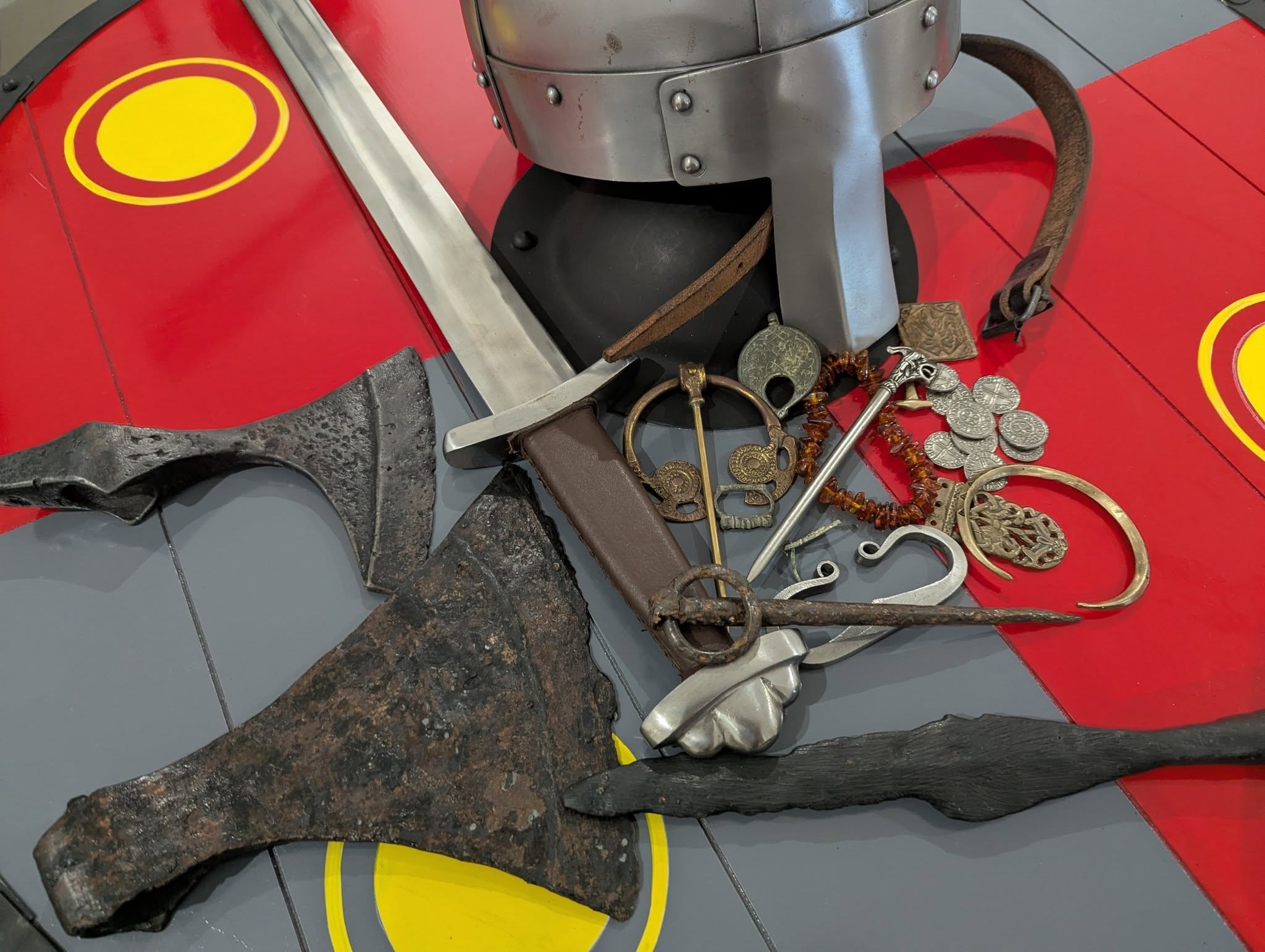
Holding History has a collection of replica and original Viking-period artefacts available for school visits and educational talks. Handling these objects brings the Viking Age vividly to life.
Weapons and armour
Original and replica Viking axes, swords, shields, and chainmail for hands-on examination
Jewellery and coins
Replica and genuine Norse and early Christian jewellery, Thor's hammer pendants, and Viking-age coin replicas and an 9th Century brooch
Tools and everyday objects
Replica Viking tools, combs, and domestic objects reflecting everyday Norse life
Clothing
examine the types of clothes worn and how a cloak would have been used.
Book a school talk
Bring the Viking Age to life in your classroom. Get in touch to discuss a visit, artefact loan, or a tailored talk for your year group.